
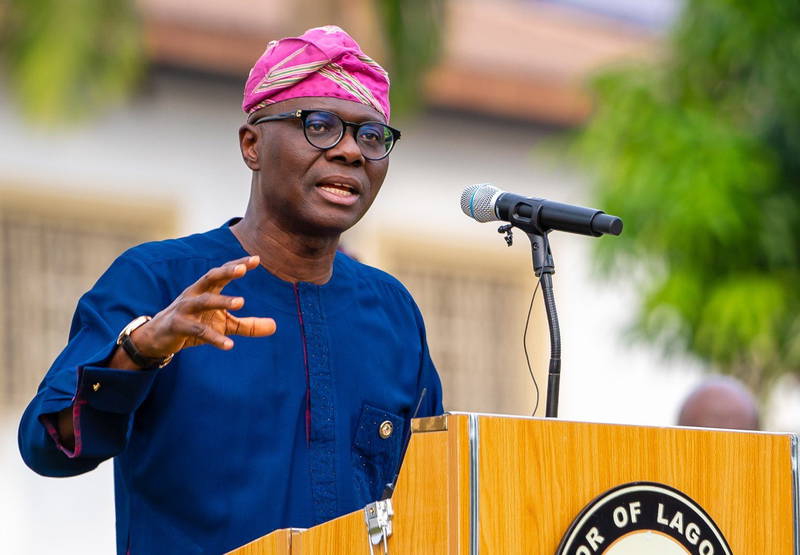
With the influx of people into Lagos during the festive season in the past three years, which had been driven by social ambience, improved security and infrastructure, Governor Babajide Sanwo-Olu has reversed the popular trend of population shortfall in the state during the season. Gboyega Akosile reports that the Governor has worked round the clock to make Lagos a preferred destination for the Christmas festive season.
As the indisputable commercial and social hub of Nigeria, Lagos is long associated with movement and momentum. Regardless of the season, the city experiences a massive daily influx of people, with recent figures suggesting that around 6,000 people arrive daily, with about half staying. Despite this, one noticeable trend in the past was that the city usually experienced a mass departure of people during the Christmas season.
But in the last few years, especially under the current administration in the state, the story is being re-written, as a result of various initiatives of Governor Babajide Sanwo-Olu, which align perfectly with the spirit of ‘Detty December’. For instance, during the last two seasons, rather than witnessing an exodus of people, the city experienced the entry of large numbers of people who saw Lagos as an ideal destination during the season.
Globally, December is a special month, and the Christmas period is a season when people come together to celebrate life, achievements, and shared experiences with loved ones. In Nigeria, no city reflects this spirit more vibrantly than Lagos — a metropolis that, for more than five decades, has evolved into the cultural and celebratory heartbeat of the nation.
Year after year, Lagos dazzles with striking décor, colourful light installations, and festive attractions positioned across strategic locations. This past December was no different. In fact, it stood out even more. In the spirit of Detty December, the Sanwo-Olu administration led by example with improved infrastructure, security, and various social innovations, while many corporate brands partnered with the state to transform public spaces. As a result of this, parks were illuminated, city corridors were beautified, all to give a renewed excitement to the Lagos skyline.
These results were not accidental. They were made possible through the policy direction, institutional backing, and enabling environment provided by the government under Sanwo-Olu’s leadership. In the last five years, his administration has, deliberately positioned the commercial city as a festive-tourism destination, created structures that support creativity, hospitality and cultural expression, without missing out the need to deepen economic activities throughout the season.
With Sanwo-Olu on the driver’s seat, ‘Detty December’ in Lagos has therefore moved beyond a social trend and assumed a strategic economic period with urban vibrancy. Of course, it was also a peak period for social activities as players in the entertainment industry were kept busy throughout the season.
Perhaps the build-up to the Lagos’ 2025 ‘Detty December’ was the global statement made by the state with the ‘E1 Electric Boat Race’, held in October. By hosting the E1 Electric Powerboat Race — Africa’s first all-electric water sports championship, Sanwo-Olu thus projected Lagos onto the global tourism stage. The race, which had, previously been held in Europe, Saudi Arabia, and other places became a major international attraction, drawing sports enthusiasts, innovators, global dignitaries, and marine tourism stakeholders to the city. It showcased Lagos’ waterways, hospitality infrastructure, and organisational capacity, thereby reinforcing the administration’s ambition to align tourism, sustainability, and global sporting innovation.
One of the most remarkable gains recorded during the last Detty December season was in the area of security. Lagos experienced one of its most peaceful festive periods in recent years, with criminal activities reduced to minimal levels compared with earlier eras marked by frequent incidents of theft, robbery, and violent disruptions.
Through enhanced surveillance, inter-agency collaboration, improved community policing and visible deployment across entertainment hubs, beaches, recreational centres, and transportation corridors, the administration strengthened public confidence. To this end, residents, returning diaspora visitors and tourists were able to move freely and participate in a number of activities without fear, which, all over the world, remains a critical foundation for tourism and festive mobility.
No wonder, the impact was evident in the fact that more events were held late into the night, more economic activities were sustained, and Lagos reinforced its reputation as a city that could host large-scale festive engagements in a secure and coordinated manner.
In the area of infrastructural development, the achievement of Sanwo-Olu’s administration was again measured during the season. Public recreational centres across both the Mainland and Island were well activated and maintained for the season, while several leisure corridors and public venues received enhancements that made them visitor-ready.
A major innovation was the introduction of a structured activity calendar, mapping events from December 1st to December 31st. Although several social activities began from October, they only entered the feverish stage in December. For the first time in the state’s history, activities were carefully coordinated across multiple districts, engaging residents, creatives, investors, and businesses throughout the festive window. Many of these events were organised with the support and facilitation of government agencies. Observers have described this as a testament to the administration’s collaborative approach.
Beyond physical infrastructure, the season also provided ample opportunities for members of the public to appraise the effectiveness of various reforms introduced by the administration towards improving the ease of doing business during the festive period. It was easy to evaluate this through the activities of event promoters, hospitality operators and creative entrepreneurs, who all found Lagos a conducive environment for organizing concerts, beach carnivals, fashion shows, food festivals and lifestyle exhibitions.
In the hospitality industry, the administration’s policy direction also encouraged investor confidence and private-sector participation, expanding the Detty December value chain across sub sectors, such as hotels and short-let apartments, transport and ride-hailing services. Others are restaurants, lounges, fashion, arts, and lifestyle businesses. This alignment between policy support and private enterprise reaffirmed Lagos as a city where governance and commerce work hand-in-hand to drive seasonal economic growth.
Another unique achievement of the government during the season was traffic management and festive mobility. There is no gainsaying the fact that traffic remains one of Lagos’ most enduring challenges, particularly during high-movement periods like December. Yet the last festive season recorded noticeable improvements as multiple access routes were opened, traffic officers were deployed strategically, and routes around major event clusters received coordinated attention.
These measures eased mobility between venues, markets, leisure corridors, and hospitality centres, allowing businesses to remain active while residents and visitors navigated the city more conveniently. Of course, the credit has also been given to Sanwo-Olu because it’s believed that the seamless movement during the season reflected deliberate planning and operational management of his administration.
Meanwhile, the creative vibrancy of Lagos continues to define its December identity as concerts, art exhibitions, fashion events, comedy shows, beach festivals and cultural showcases dominated the entertainment calendar during the season, which, in all, strengthened Lagos’ reputation as Africa’s leading creative hub. The administration’s ongoing investment in art, culture, and tourism amplified this momentum, ensuring that Detty December was not merely about leisure but also about cultural expression, identity, and social cohesion.
Finally, the return of the iconic Eyo Festival sealed the deal. From any angle one chooses to look at it, the historic return of the Eyo Festival, staged in December 2025 after a long break, was a landmark activity that highlighted the season more than any activity. The cultural procession, which was rooted in royal heritage and Lagos tradition, added depth, symbolism, and prestige to the festive atmosphere.
Beyond spectacle, the Eyo Festival strengthened heritage tourism, attracting cultural enthusiasts, historians, visitors, and local observers. Markets surged with activity, hotels recorded increased patronage, and transport operators witnessed significant movement as thousands gathered to witness the colourful display.
The revival of this iconic festival under the enabling climate provided by the administration reaffirmed Lagos’ role as both a modern city and a proud custodian of tradition.
For the economy, Detty December generated widespread economic activities for hotels, transportation businesses, nightlife operators, and even informal vendors. The city recorded increased spending, visitors’ influx, and stronger tourism value chains.
In the final analysis, the season reaffirmed the power of coordinated governance, where policy reforms, infrastructural development, security, and private-sector support intersected to produce measurable social and economic value.
Little wonder that Lagos was listed among top seven art destinations in the world to visit in 2026, by Artsy, the leading global online Art Marketplace.
In a report released by artsy.net, just as I was putting this article together, the city was described as “a banner biennale in West Africa’s preeminent art capital.”
According to an article titled “7 Art Destinations to Visit in 2026” published in artsy.net by Maxwell Rabb on January 8, Lagos is one of the “seven spots—from marquee art events to rising scenes—that are worth adding to an art-inspired travel itinerary in 2026.”
The seven destinations picked by the leading global online Art Marketplace are Venice, Italy; Doha, Qatar; Sydney, Australia; Bangkok, Thailand; Lagos, Nigeria; Philadelphia, Pennsylvania and Malta.
In 2025 December, the Lagos governor and his team made a strong statement that Detty December has moved from being a mere cultural expression into a sustainable economic season, one that affirmed Lagos’ status as Nigeria’s commercial city, festive capital and Africa’s rising tourism powerhouse.