

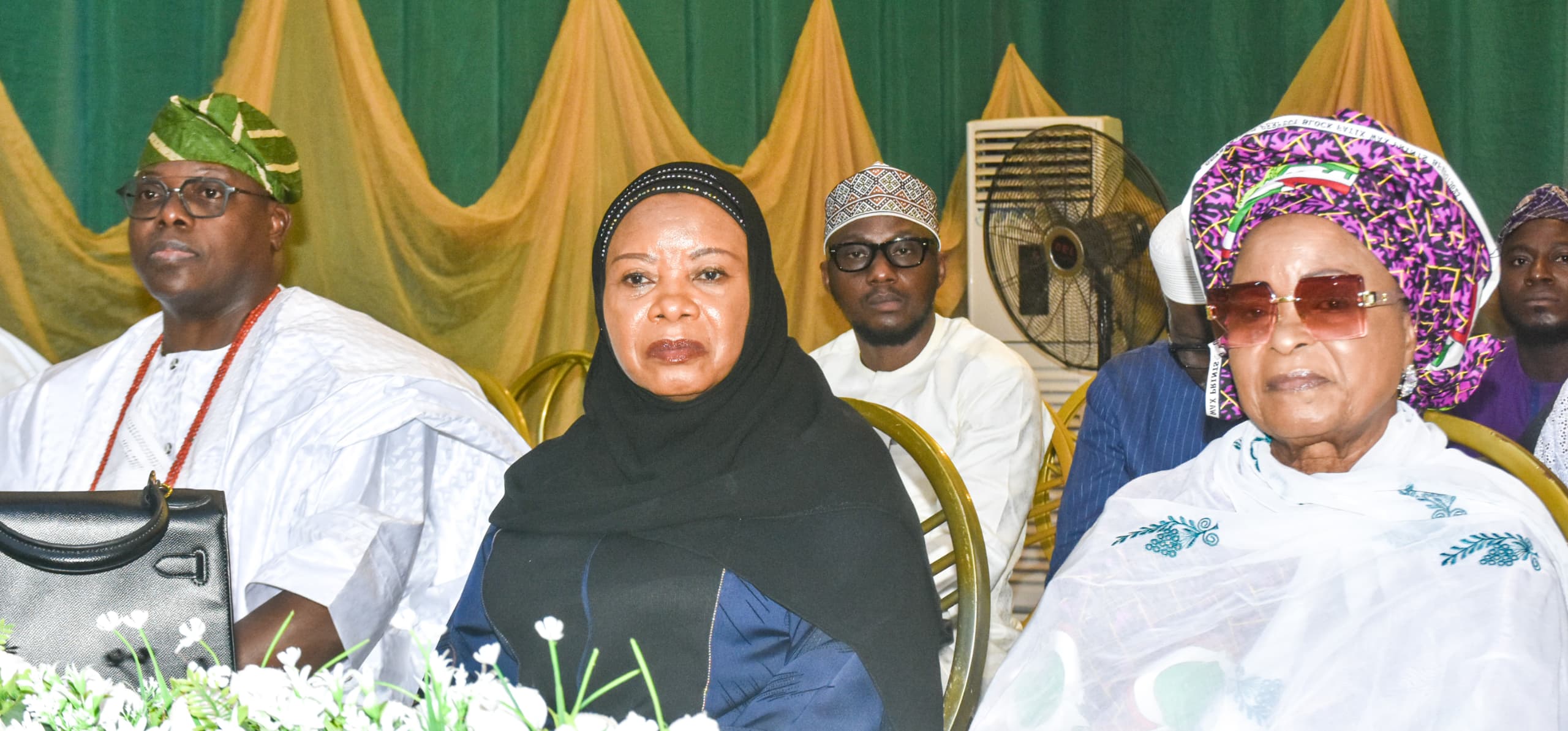
The Federation of Muslim Women’s Associations in Nigeria (FOMWAN), Lagos State chapter, has intensified its appeal for financial support to complete its Primary Healthcare Centre project in Eti-Osa Local Government Area, as it marked its 40th anniversary with a strong call for climate responsibility and women-led environmental action.
Speaking at a well-attended 40th Anniversary of the Association held at the Alausa Community Mosque Multi-Purpose Hall on Thursday, the Amirah of FOMWAN Lagos, Serifat Oluwatoyin Ajagbe, described the ongoing construction of the healthcare facility at Olugborogan area, Elesan Village, Eti-Osa LGA, as a strategic intervention aimed at bridging gaps in access to primary healthcare services.
She called on philanthropists, corporate organisations and well-meaning Nigerians at home and abroad to partner with the association to ensure the facility becomes operational soon.
Ajagbe reiterated that beyond healthcare delivery, FOMWAN Lagos remains active in civic education, election observation, gender advocacy, human rights promotion and humanitarian interventions during communal conflicts and flooding.
She added that the association collaborates with government agencies to disseminate public health information and extends welfare support to inmates in correctional centres.
The Royal Father of the Day and Chairman of the Occasion, Oba Abdulwasiu Omogbolahan Lawal, commended FOMWAN Lagos for four decades of sustained service to faith and humanity.
Reflecting on the milestone, the monarch challenged members to remain faithful to their founding vision.
“At forty, we must ask ourselves: Are we still aligned with the vision of our founders? Are we sincere in our service for the sake of Allah? Are we positively impacting lives and strengthening our communities?” he said.
He noted that for four decades, FOMWAN Lagos has stood as a pillar of faith, discipline, education, family support and community development, empowering women, supporting widows and advancing healthcare initiatives.
However, he observed that serious challenges remain, including discrimination, economic hardship, domestic violence, depression and health concerns affecting many women. He described the Primary Healthcare Centre as a timely grassroots response, particularly for riverine and peri-urban communities within Eti-Osa.
The Oniru urged individuals and corporate bodies to support the project, stressing that sustainable development requires synergy among faith-based organisations, traditional institutions and government. He added that women-led initiatives continue to demonstrate their power to drive social transformation.
Delivering the keynote lecture, Professor Khadijah Olaniyan urged Muslim women to see climate change as both a spiritual and civic responsibility.
She said environmental degradation stems largely from human excesses and mismanagement, citing indiscriminate waste disposal, particularly poor e-waste management, as a major contributor to contamination and disease.
Advocating the concept of a “Green Mosque” environment, she encouraged mosques and Islamic centres to adopt proper waste management systems, reduce plastic usage and integrate environmental sustainability into faith practice.
Citing the Holy Qur’an and Islamic teachings, she noted that the Holy Prophet encouraged the planting of trees, describing it as a spiritual responsibility that safeguards the environment and mitigates the causes and effects of climate change.
“Planting a tree is not just environmental activism; it is an act of worship that safeguards humanity,” she said.
Olaniyan also identified carbon emissions from cooking systems, vehicular pollution, blockage of drainage channels and open burning of waste as contributors to flooding and climate-related disasters.
She warned that overconsumption driven by covetousness worsens climate challenges and has far-reaching implications for health, education, food security and economic stability. Climate change, she added, contributes to desertification and rising food costs, affecting availability and affordability.
The professor urged governments at all levels to strengthen environmental management systems and ensure proper supervision of officers responsible for waste management.
She called for stricter enforcement of sanitation regulations and improved oversight of environmental sanitation exercises. She also advocated greater emphasis on climate education for women and schoolchildren to promote long-term behavioural change.
Olaniyan encouraged women to reduce waste generation, stop open burning, minimise plastic usage and organise events that avoid disposable plastic containers. “Let us take the lead in mitigating the causes and consequences of climate change,” she charged.
The 40th anniversary theme underscored the importance of wisdom and informed engagement as Muslim women contribute to global conversations on climate resilience, sustainability and community development.
Ajagbe expressed appreciation to religious leaders, traditional rulers, invited guests and members of the public for their support.